From prepress to Progymédia, Gilbert Beaulieu shares a conviction shaped by change: understand the business, preserve what works and deliver useful solutions.
Understand the real work, then decide what needs to change.
I did not become a technology entrepreneur because technology was fashionable. I became one because it had already transformed my trade.
Before founding Progymédia, I worked in prepress, an established industry with its own methods, equipment and expertise. Then information technology changed the rules at an extraordinary pace. I had to close a business and reinvent myself.
A conviction shaped by change
It was not the path I had imagined. But I still had the trust of several clients. I understood their operations, constraints and actual needs. I also believed that the technology which had disrupted my industry could create tremendous opportunities for others.
That is the spirit in which Progymédia was founded in 1993: helping businesses evolve thoughtfully, preserving what already works and improving what slows them down. A technology’s novelty alone is not a reason to adopt it. We first need to understand what it will do for the business.
When people become the connection between systems
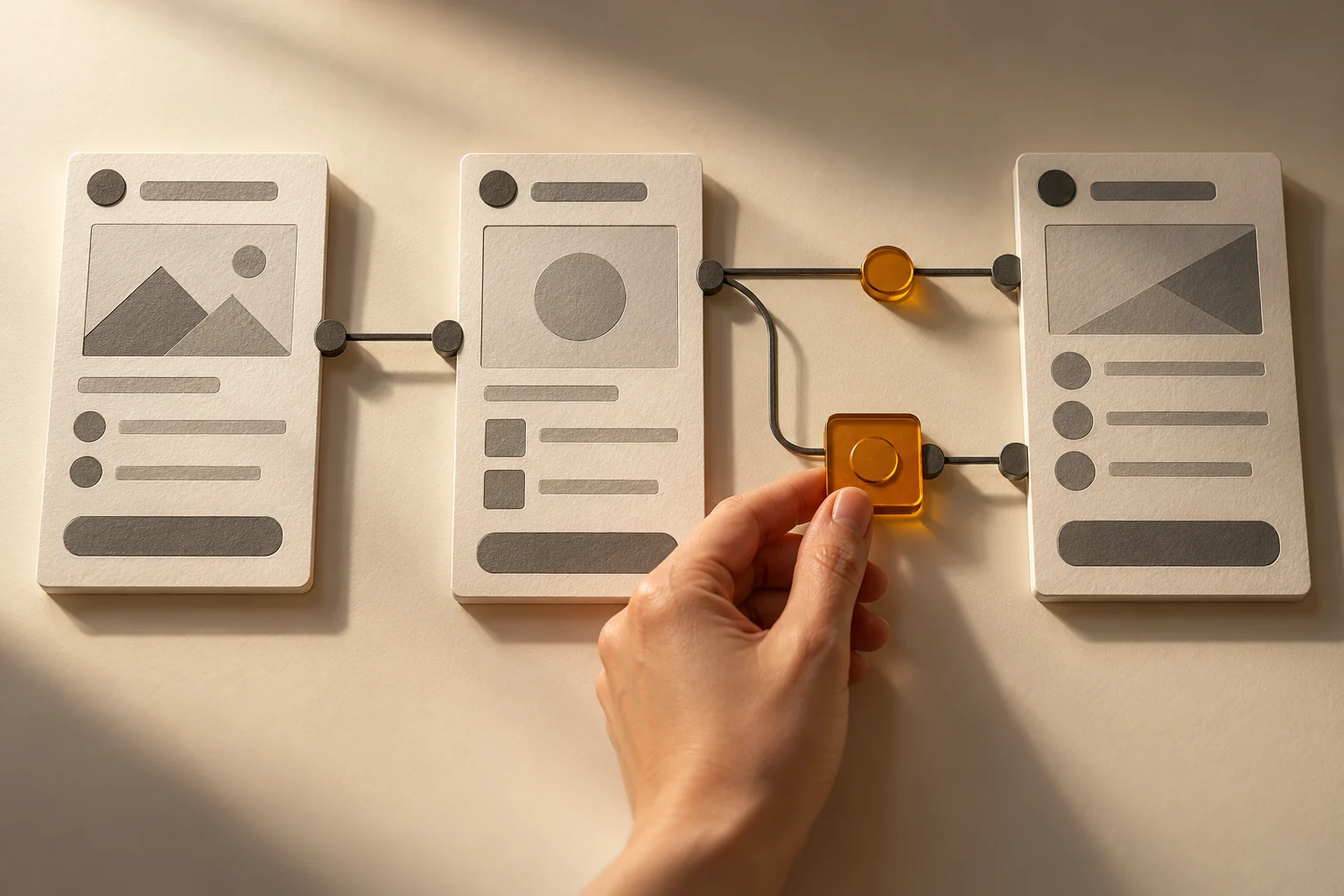
Most businesses already have several tools: an ERP essential to their operations, an online store, Excel files, internal software and sales platforms. Yet their teams often still have to bridge the gaps.
An order received by email is entered manually into the ERP. A sales representative calls the office to confirm a price. The inventory shown to a customer differs from the internal system. The same information moves from one file to another because two platforms do not communicate.
The problem is not always a lack of software. It is the gap between the tools and how the business actually works. Employees search, copy, validate, correct and re-enter information that should already be flowing. That is precisely where we come in.
Understand, code, connect and deliver
Every business has its own customers, prices, business rules, approvals and inventory constraints. Two distributors can use the same ERP and operate in completely different ways.
We therefore begin by understanding what slows teams down, where information gets lost, what customers expect and what already works. Then we code, connect and deliver. We remain involved in the design, development, integration, deployment and ongoing evolution of the solution.
Since 1993, our expertise has grown at the intersection of ERP systems, B2B commerce, automation, field operations and, now, artificial intelligence. Within a business, these areas need to work together. That understanding has been built through real projects and real constraints.
Boutik: one foundation, many possibilities
The challenges shared by manufacturers, distributors and B2B businesses led us to evolve our approach. Our custom development work now builds on Boutik, a flexible foundation connecting existing systems with the tools a business needs.
Boutik makes useful data and functions in modern and older ERP systems accessible under each project’s business rules and permissions. This provides a common basis for connecting applications, automation and AI tools without starting every integration from scratch.
A customer portal, a field application, invoice processing or an AI assistant are a few possibilities. They do not define Boutik’s limits: other uses can be built around the actual work, available systems and needs that emerge over time.
The purpose remains the same: getting the right information to the right place at the right time. A business can begin with one focused challenge, then extend its solution as its needs change, including with new AI tools or models.
AI gains its value through operations
Artificial intelligence offers extraordinary possibilities. But used on its own, it risks becoming one more tool in a business that already has plenty. Its value emerges when it is connected to real data, business rules and processes.
Reading an order received by email is a first step. Recognizing the customer, identifying the products, applying the relevant rules, having the information validated and sending it to the right system gives that work an operational purpose.
AI does not replace an understanding of operations. Our responsibility is to make it practical, accessible and properly governed, with value that can be assessed in the business’s everyday work.
A family business with a long-term view
Today, I run Progymédia with my son Philippe, who plays a central role in the architecture and technological evolution of our solutions. This continuity between father and son allows us to make decisions with a long-term view.
We build solutions our clients will need to use, maintain and develop for years. Technologies change quickly; the responsibility to understand, deliver and remain involved endures.
I am proud to see our team develop its expertise in digital commerce, ERP integration, automation, field applications and AI. Above all, I am proud to see the concrete impact of that work for our clients.
Value is measured in everyday work
A technology’s value also lies in work that no longer needs to be done: an order entered just once, a customer checking their price without waiting for a call back, a representative with the right information in front of their customer.
It is also a team handling more volume without unnecessarily adding to its administrative workload, and data reliable enough to support decisions. By reducing manual tasks and errors, we help local businesses serve their customers better and accommodate growth.
Modernization can mean giving people better tools, removing tasks that add no value and allowing teams to focus their energy on what they do best. It is also a way to develop technological skills in Québec.
What has endured since 1993
My experience taught me to use technology intelligently, pragmatically and responsibly, before it forces change upon us. Our method remains: understand the reality, code what is missing, connect what matters and deliver something that actually works.
I am proud of the technologies we develop. But I am especially proud of our team, our commitment to staying involved and the trust our clients have placed in us over the years.
There is only one Progymédia, and I am proud of it.
Where should your business begin?
✓ Observe a real process with the people who carry it out.
✓ Identify duplicate entry, waiting times and information that is difficult to find.
✓ Recognize the tools and working methods that already work well.
✓ Choose a focused first challenge and define the expected outcome.
✓ Plan the connections, validations and future evolution of the solution.